
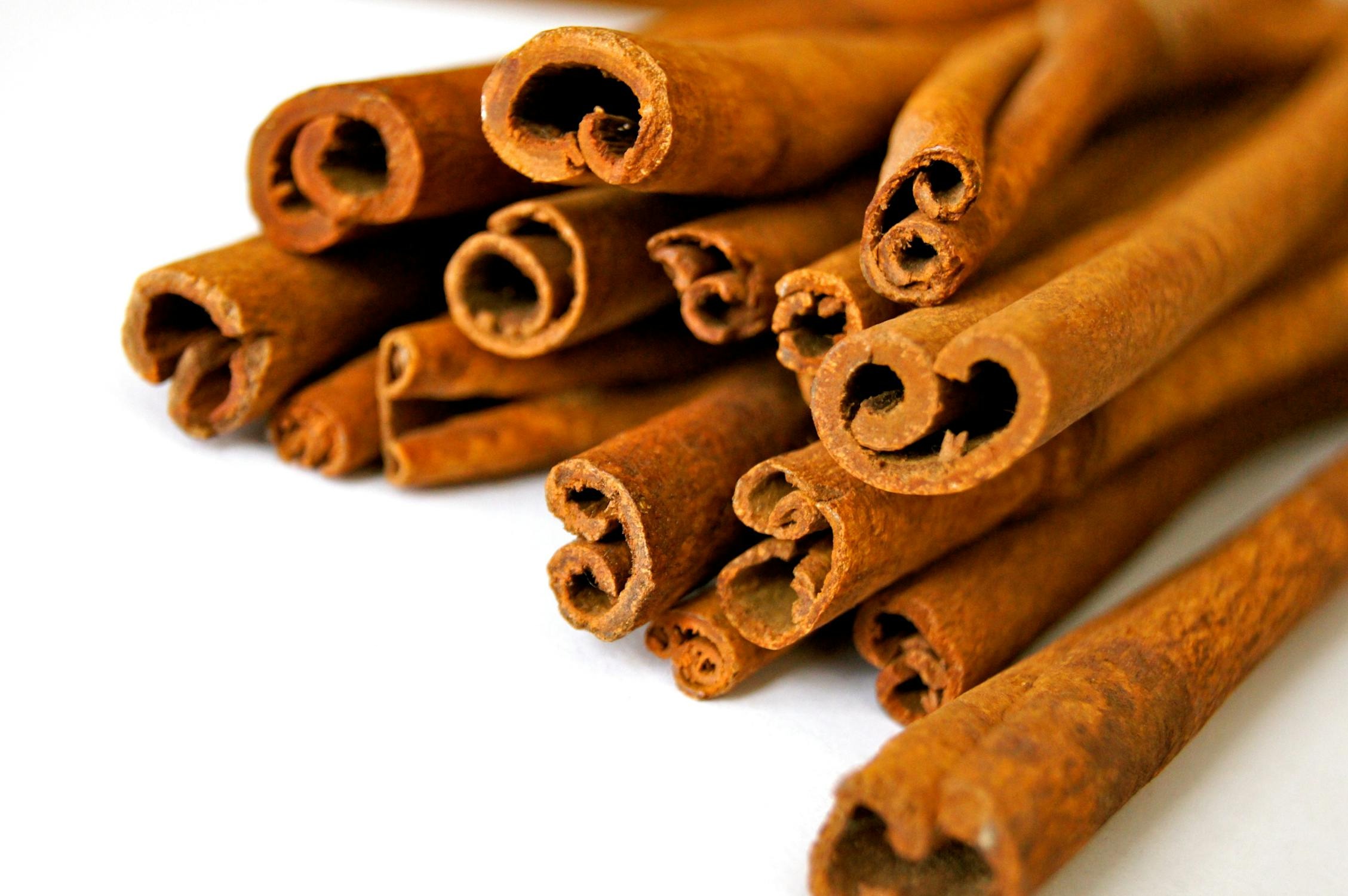

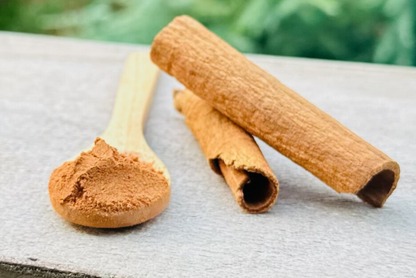

Aromatic bark scrolls and powder
Aromatic bark scrolls and powder
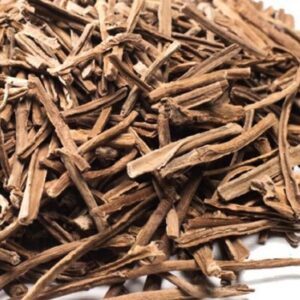
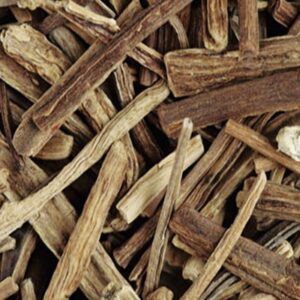
Description: Cassia grows in hot, wet, tropical climates both wild and commercially. The stems are cut down when the bark is mature. The bark is removed in short lengths and dried, with some varieties rolling into quills. Cassia is an aromatic bark, similar to cinnamon, but differing in strength and quality. Cassia bark is darker, thicker and coarser, and the corky outer bark is often left on. The outer surface is rough and grayish brown, the inside bark is smoother and reddish-brown. Cassia is less costly than cinnamon and is often sold ground as cinnamon. When buying as sticks, cinnamon rolls into a single quill while cassia is rolled from both sides toward the center so that they end up resembling scrolls. In India, cassia is grown in the North-Eastern states and in the evergreen tracts along the high ranges of the Western Ghats. But, the domestic cultivation is not adequate enough to meet the domestic market demand for the product.
Description
Aromatic bark scrolls and powder
A fine powder dedicated to male comfort
Pygeum bark powder is primarily used in the formulation of capsules or blends for urinary tract well-being. It acts to reduce mild prostatic inflammation and promotes better bladder emptying. Rich in phytosterols, it naturally complements treatments based on nettle, pumpkin, or saw palmetto.
Description
Fine, reddish-brown to dark brown powder with a woody, aromatic odor. Obtained by controlled grinding of dried bark from sustainable sources (under CITES control).
Nomenclature
- Common name: African plum
- Latin name: Pygeum africanum (syn. Prunus africana )
- Family: Rosaceae
- Part used: Bark
- Form: Powder
- Origin: Sub-Saharan Africa (mountain forest areas)
- English name: African cherry bark powder
- Name in German: Afrikanische Pflaumenrinde Pulver
- Name in Spanish: Corteza de cerezo africano en polvo
- Name in Italian: Polvere di corteccia di ciliegio africano
- Name in Arabic: مسحوق لحاء البرقوق الأفريقي
Main virtues
Prostate decongestant, urinary tract soother, mild anti-inflammatory, antioxidant, male tonic.
Main constituents
Phytosterols (β-sitosterol), triterpenic acids (ursolic, oleanolic), ferulic, tannins, fatty esters, n-docosanol.
Professional use and dosage
- Capsules: 250 to 400 mg/capsule – up to 2 times/day.
- Loose powder: 1 g to 1.5 g/day as a 4 to 6 week course – to be incorporated into a liquid preparation (plant-based drink, juice).
- Hydroalcoholic extract: prepared from standardized powder according to current standards.
Precautions, side effects and contraindications
- Reserved for adult males. Not recommended for pregnant or breastfeeding women.
- May interact with certain medications (especially anti-inflammatories and diuretics).
- Ensure the certified origin of the product (traceability obligation – CITES status).
- Respect the recommended doses. Avoid prolonged self-medication.
History and traditional use
Traditionally used by African healers for genitourinary disorders, Pygeum africanum was incorporated into European pharmacopoeias as early as the 20th century. It is the subject of extensive clinical research for its effects on prostate health. Its collection is now strictly regulated to preserve the natural resource.
Miscellaneous information
- Packaging: kraft bag or opaque pot (professional use).
- Storage: dry, away from light and humidity.
- Shelf life: 18 to 24 months.
- TARIC customs code: 1211.90.86.00
Sources and references
- CITES – International Convention (Appendix II)
- Wikiphyto – https://www.wikiphyto.org/wiki/Prunier_d’Afrique
- EFSA, EMA – Safety monographs on Prunus africana extracts
- Pl@ntUse – https://uses.plantnet-project.org
Note to project creators and formulators:
Please note that we do not provide any technical documentation (datasheet, certificate, analysis, etc.) for quantities less than 1 kg. Documentation is reserved exclusively for registered professionals (SIRET number or equivalent required) and for clearly identified projects. Thank you for your understanding.
Aromatic bark scrolls and powd Aromatic bark scrolls and powd Aromatic bark scrolls and powd Aromatic bark scrolls and powd



Reviews
There are no reviews yet.